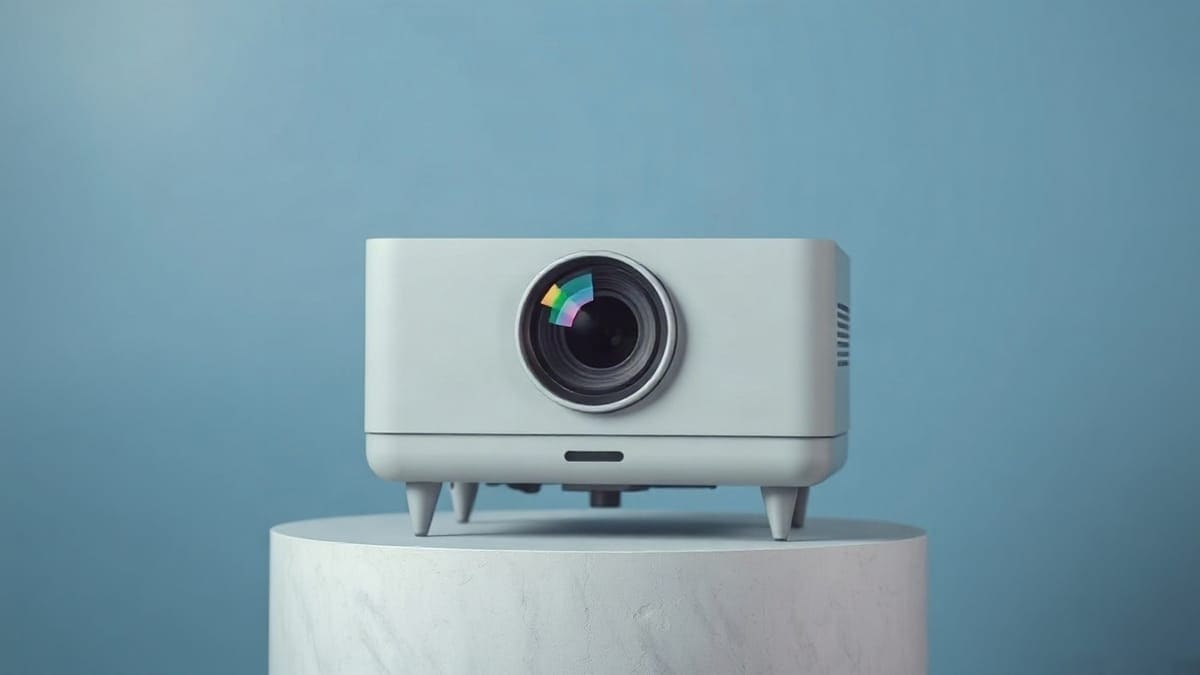
We compared the JMGO N1S Ultra and N1 Ultra, two 9.9 lb (4.5 kg) 4K triple laser gimbal projectors. The N1S Ultra is the one to buy: 3,000 ANSI lumens from JMGO, Google TV with Netflix built in, and the same 2 HDMI 2.1 ports and 30,000-hour laser as the older model. The N1 Ultra runs Android TV 11, and no two sources agree on its brightness. Take it only at a clearly lower price, since ProjectorCentral lists it as discontinued since April 2026.
Which of the two should you pick?
- Get the N1S Ultra if you want the current model, Google TV with Netflix built in, a faster MediaTek MT9679 chip and a 3,000 ANSI lumen rating from JMGO that reviewers repeat.
- Take a leftover N1 Ultra if the price is well under the N1S Ultra, you already own a streaming stick, and you mostly watch at night.
- Step up to the N1S Ultimate if the room has windows. It is rated at 3,500 ANSI lumens (ProjectorCentral measured 2,608 in its normal modes), and it is the better answer to a bright living room.
- Neither if you care most about Dolby Vision and a zoom lens. Look at the XGIMI Horizon Ultra, covered below and in our XGIMI Horizon Ultra page, or at the wider best projector comparison.
Quick answer
- Brightness: 3,000 ANSI lumens for the N1S Ultra (JMGO figure). The N1 Ultra is listed at 4,000 ANSI lumens on one review site, 1,900 ISO lumens on ProjectorCentral and 2,200 CVIA lumens on a product listing. Notebookcheck says the N1S Ultra moved up from 2,200 to 3,000.
- Picture: both are 3840 x 2160 output, RGB triple laser, 1,600:1 contrast, about 110% of the BT.2020 gamut, HDR10.
- Size: both are 9.49 x 7.99 x 9.29 inches and 9.9 lb (4.5 kg), with a gimbal that tilts 135 degrees and turns 360 degrees.
- Ports: 2 HDMI 2.1, 1 USB-A, 1 headphone jack on both.
- System: Google TV on the N1S Ultra, Android TV 11 on the N1 Ultra.
- Sound: 2 x 10 W speakers on both.
What are the JMGO N1S Ultra and N1 Ultra?
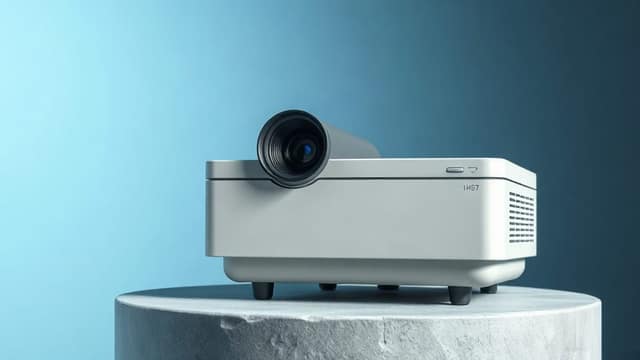
Both are portable triple laser projectors from JMGO built around the same idea. The lens head sits on a gimbal, so you set the projector on a shelf or a table and point it at a wall or even a ceiling. Autofocus and keystone correction square the picture for you.
The N1 Ultra came first. ProjectorCentral dates it to June 2023 and marks it discontinued in April 2026. The N1S Ultra followed it: The Gadgeteer published its review in June 2024, and Notebookcheck described it as the improved N1. The two look almost the same on a shelf, and Trusted Reviews lists the same 241 x 202 x 235 mm body and 4.5 kg weight for both.
One date does not line up. ProjectorCentral lists the N1S Ultra's release as March 2023, which cannot be right if the N1 Ultra came out in June 2023 and the N1S Ultra is its successor. We use the review dates and treat the ProjectorCentral date as an error.
Where does it sit in the family? Below both sits the N1S 4K, the smaller and dimmer model. Above both sits the N1S Ultimate. If you are still deciding between JMGO and other makers, our triple laser guide lines up the brands.
JMGO N1S Ultra vs N1 Ultra: specs side by side
Every value below comes from a page we opened: the ProjectorCentral spec pages, Projector Reviews, The Gadgeteer, Digital Camera World and Notebookcheck. Disagreements are explained after the table.
| Spec | N1S Ultra | N1 Ultra |
|---|---|---|
| Brightness | 3,000 ANSI lumens (JMGO) | 1,900 ISO / 2,200 CVIA / 4,000 ANSI claim |
| Light source | RGB triple laser (MALC 2.0) | RGB triple laser (MALC) |
| Resolution | 3840 x 2160 (4K UHD) | 3840 x 2160 via 4x pixel shift |
| HDR | HDR10, 10-bit | HDR10 and HLG |
| Contrast | 1,600:1 | 1,600:1 |
| Color gamut | About 110% of BT.2020 | Not published on the pages we read |
| Throw ratio | 1.19:1 to 1.21:1 | 1.20:1 |
| Speakers | 2 x 10 W | 2 x 10 W, Dynaudio tuned |
| Ports | 2 x HDMI 2.1, USB-A, 3.5 mm out | 2 x HDMI 2.1, USB-A, 3.5 mm out |
| Wireless | Wi-Fi 6, Bluetooth 5.0 | Wi-Fi 6, Bluetooth 5.0 |
| System | Google TV, Netflix built in | Android TV 11 |
| Processor | MediaTek MT9679 | MediaTek MT9669 |
| Weight | 9.9 lb (4.5 kg) | 9.9 lb (4.5 kg) |
| Size (H x W x D) | 7.99 x 9.29 x 9.49 in | 7.99 x 9.48 x 9.29 in |
| Noise | Under 26 dB | 26 dB |
| Laser life | About 30,000 hours | 30,000 hours |
Sources are listed at the bottom of the page. Prices are left out on purpose: use the check price buttons.
Three entries deserve a warning. The throw ratio spans 1.19:1 to 1.21:1 for the N1S Ultra depending on the site, which is a difference of about 0.1 inch per foot and does not change how you set up. The color gamut for the N1 Ultra is not on the pages we read, so we do not copy the N1S Ultra's 110% across. And ProjectorCentral lists the N1S Ultra's system as Android TV, while Notebookcheck and Digital Camera World say Google TV; we follow the two reviews.
How much brighter is the N1S Ultra?
Brighter, by about a third at the most generous reading and about 800 lumens at the least. The N1S Ultra is rated at 3,000 ANSI lumens, and The Gadgeteer's light meter found about twice the light of a Dangbei Mars. Notebookcheck writes that it "now projects 3,000 ANSI lumens instead of 2,200" on the N1 Ultra.
The N1 Ultra figure is where sources collide. This table lists every value we found.
| Source | N1 Ultra brightness | Unit |
|---|---|---|
| ProjectorCentral | 1,900 | ISO lumens (JMGO figure) |
| Product listing, same page | 2,200 | CVIA lumens |
| Notebookcheck | 2,200 | Lumens (compared with the N1S Ultra) |
| Projector Reviews | 4,000 | ANSI lumens (manufacturer claim) |
ISO, CVIA and ANSI are different measuring methods, and ISO 21118 is the stricter one, so the four values are not strictly comparable. The 4,000 ANSI claim cannot be reconciled with a 3,000 ANSI successor that reviewers call brighter. Our reading is that 2,200 to 3,000 is the real step, and that the 4,000 figure is a marketing number that does not hold up. If you want the full story on why one unit has several brightness numbers, see projector brightness explained.
In a room, 3,000 ANSI lumens means a dim room first. Digital Camera World reports that the N1S Ultra did not beat daylight through two windows on a 100 inch screen. So use blinds, or choose the brighter N1S Ultimate.
Is the picture better on the N1S Ultra?
Slightly, and mostly through brightness. The N1S Ultra's image is rated at 1,600:1 contrast with about 110% BT.2020 coverage and more than 97% laser speckle reduction, and reviewers praise sharpness and HDR. Digital Camera World saw no noticeable laser speckle. The Gadgeteer lists more than 95% brightness uniformity.
Both models use a DLP chip with pixel shifting. Projector Reviews lists the N1 Ultra as 1920 x 1080 native with a 4x pixel shift to 3840 x 2160. For the N1S Ultra, Notebookcheck says the chip is the same, while the sources we read do not state native or shifted for it, so we do not claim native 4K. For the difference in practice, read our native 4K vs pixel shifting guide.
The brighter engine matters most for HDR. A 4K HDR10 picture needs light to show highlights, and a 3,000 lumen laser keeps them visible at 100 inches in a dim room. On the older N1 Ultra at about 2,200 lumens, the same scene looks flatter once the lights are on.
Which one has the better system, sound and ports?
The N1S Ultra has the better system, the sound is equal, and the ports match. Here is what changed.
System. The N1S Ultra moves to Google TV with a built-in Chromecast and Netflix, according to Notebookcheck. The N1 Ultra lacks this. It runs Android TV 11, so Netflix is not built in and you add a streaming stick or cast. The N1S Ultra also has 32 GB of storage and 2 GB of RAM, and its MediaTek MT9679 replaces the N1 Ultra's MT9669 (TechRadar, via Notebookcheck). Notebookcheck adds that the N1S Ultra plays 3D from external sources.
Sound. Both have 2 x 10 W speakers. The N1 Ultra's are tuned with Dynaudio, and the Gadgeteer found the N1S Ultra's sound noticeably better than the Dangbei Mars, with decent bass. Neither replaces a soundbar for a home theater, but both are fine for a bedroom.
Ports. Both have 2 HDMI 2.1 ports, USB-A and a 3.5 mm headphone jack. No Ethernet and no optical output. One question is unsettled: The Gadgeteer says one HDMI port on the N1S Ultra supports eARC, while Digital Camera World says there is no eARC. We cannot settle it, so check JMGO's spec sheet if you plan to send audio to a soundbar.
N1S Ultra vs N1 Ultra: which one for which room?
Pick by the room, not by the model name. The table below pairs each case with a screen size and a verdict.
| Room | Screen size | Lights | Pick |
|---|---|---|---|
| Bedroom, ceiling projection | 80 to 100 in | Off | Either |
| Living room, blinds closed | 100 to 120 in | Dim | N1S Ultra |
| Living room, windows open | 100 in | Daylight | N1S Ultimate |
| Backyard at dusk | 100 to 150 in | None | N1S Ultra |
| Rented apartment, no streaming stick | 100 in | Dim | N1S Ultra |
For a screen of 100 inches, the throw ratio of 1.2:1 puts the projector 8.7 feet away. For the exact distance of your screen, use our throw ratio explainer. For outdoor use, the outdoor projector guide covers screens and dusk brightness.
What is better than the N1S Ultra?
The N1S Ultimate. It is rated at 3,500 ANSI lumens (2,608 measured by ProjectorCentral) with a laser rated for 30,000 hours, against 3,000 ANSI rated for the N1S Ultra. It is the sensible step if windows are the problem. See our N1S Ultimate review for the full comparison, or the daylight projector guide if you want to see the brighter alternatives from other brands.
What is the N1 Ultra equivalent to in JMGO's lineup now?
The N1S Ultra. It has the same body, the same ports and the same laser rating, so it is a direct replacement for the discontinued N1 Ultra. The N1S Ultra adds brightness, Google TV and a faster chip. Our JMGO lineup page places all the models in order.
What about the XGIMI Horizon Ultra?
The XGIMI Horizon Ultra is the serious alternative if picture quality in a dark room matters more than portability. It supports HDR10, HLG and Dolby Vision, which neither JMGO model lists. XGIMI rates it at 2,300 ISO lumens, but Tom's Guide measured 1,295.5 ANSI lumens and Sound & Vision measured 1,303 ANSI lumens. That is far below the 3,000 ANSI lumens of the N1S Ultra.
| Spec | N1S Ultra | Horizon Ultra |
|---|---|---|
| Brightness | 3,000 ANSI (JMGO) | 2,300 ISO (XGIMI), 1,295 ANSI measured |
| Light source | RGB triple laser | LED and laser hybrid |
| HDR | HDR10 | HDR10, HLG, Dolby Vision |
| Speakers | 2 x 10 W | 2 x 12 W Harman Kardon |
| Weight | 9.9 lb | 11.4 to 11.5 lb |
| Light source life | About 30,000 hours | 25,000 hours |
| Gimbal | Yes | No |
The Horizon Ultra figures come from review summaries of Tom's Guide, TechRadar and Sound & Vision, not XGIMI's own page, so treat them as secondary. Get the Horizon Ultra for Dolby Vision in a dark home theater. Get the N1S Ultra if you want more light and the ability to aim at a ceiling. For a wider view of the field, read the best 4K projector guide and our home theater projector picks.
What is a triple laser projector and how does it work?
A triple laser projector lights the picture with three separate laser colors, red, green and blue, instead of a white lamp and a color wheel. JMGO calls its design MALC, and Projector Reviews reports that the N1 Ultra uses 9 laser diodes: 1 deep red, 2 red, 1 magenta, 3 green and 2 blue.
The light then passes to a DLP chip, which paints the picture with millions of tiny mirrors. Pure laser colors give a wide gamut: about 110% of BT.2020 on the N1S Ultra. The cost is laser speckle, a faint shimmer, which JMGO's rating of more than 97% speckle reduction targets. For the full explanation, see our laser vs DLP vs LCD guide.
How many years will a triple laser engine run?
About 30,000 hours for these two JMGO models. At 4 hours a day that is more than 20 years. Projector Reviews lists "30,000" for the N1 Ultra without a unit, and Digital Camera World says around 30,000 hours for the N1S Ultra, so treat the figure as a manufacturer rating. Our projector lifespan page explains what ends a projector's life before the laser does.
Do laser projectors dim over time?
Yes, slowly. Laser diodes lose brightness with use, so after thousands of hours the picture is dimmer than new. The 30,000-hour rating usually means the point where output has dropped to a set fraction of the original, and we did not find JMGO's exact threshold. There is no lamp to replace, which is a plus.
Can laser projectors be used in daylight?
Only partly. A 3,000 ANSI lumen laser projector handles a dim room and a room with the blinds drawn. It does not beat direct daylight on a 100 inch screen, as Digital Camera World found with two windows. For bright rooms, read how many lumens you need.
Are laser projectors worth it?
For most people, yes, if you watch in a dim room. You get no lamp changes, a fast start and wide color. They cost more than LED models, and the picture still depends on a dark room. For a cheaper way in, see our best laser projector list.
Are 4K movies worth it on these projectors?
Yes, with 4K sources like streaming or discs. A 100 inch screen shows more detail than a 1080p source, and HDR10 adds brightness range. Streaming through Google TV or Netflix gives you 4K without a player. At smaller sizes the gain is smaller.
How do you connect, restart and reset a JMGO projector?
Place it on a stable surface, plug it in and point the lens at a wall. Autofocus and keystone correction do the rest on the N1S Ultra. The unit has only a power button, and the remote has an Input Source key, so use the remote for most things. Our set-up guide walks through the steps for any projector.
To connect a device, plug it into one of the 2 HDMI 2.1 ports and press Input Source. To turn it on, press the power button on the unit or the remote. To restart, hold the remote's power key, and if it freezes, unplug it for 30 seconds. To change the language, use the system settings on Google TV (N1S Ultra) or Android TV (N1 Ultra), as on any other device running those systems. For a factory reset, our reset guide covers the general steps; we did not verify JMGO's exact menu path.
Is JMGO a good brand to buy from?
For most buyers the N1S Ultra is the JMGO to get, with the N1S Ultimate above it for bright rooms and the N1S 4K below it for dim ones. JMGO is a Shenzhen-based company that says it has built smart projectors since 2011, and the brand earns good marks from reviewers for build quality. We have not tested any of the models, so we rely on the reviews listed below. The JMGO page compares the whole range. The company is Chinese and based in Shenzhen; we could not verify where these two models are assembled, so we do not state a factory.
FAQ
What is the main difference between the JMGO N1S Ultra and N1 Ultra?
The N1S Ultra is brighter (3,000 ANSI lumens against about 2,200 for the N1 Ultra), runs Google TV and has a faster chip. Body, ports and laser rating are the same.
Is the N1S Ultra brighter than the N1 Ultra?
Yes, according to Notebookcheck and JMGO's rating. One review site lists 4,000 ANSI lumens for the N1 Ultra, which does not match the successor being brighter, so we treat it as unreliable.
Does the JMGO N1 Ultra have Netflix built in?
No. It runs Android TV 11. The N1S Ultra has Netflix built in through Google TV, according to Notebookcheck.
How many HDMI ports do they have?
Two HDMI 2.1 ports on each, plus USB-A and a 3.5 mm headphone jack. Sources disagree on whether the N1S Ultra has eARC.
Is 4K native on the N1 Ultra?
No. Projector Reviews lists a 1920 x 1080 DLP with a 4x pixel shift to 3840 x 2160.
How big a screen can they fill?
The throw ratio is about 1.2:1. Digital Camera World lists a maximum of 150 inches for the N1S Ultra, and 100 to 120 inches suits a dim room.
How loud are they?
Under 26 dB on both. The Gadgeteer called the N1S Ultra's fan a faint whoosh, almost inaudible at 2 feet.
Is the N1S Ultra enough for a bright living room?
Not with direct sun. It needs a dim room or blinds on a 100 inch screen. The N1S Ultimate, rated 3,500 ANSI lumens, does better.
How heavy are they?
Both are 9.9 lb (4.5 kg), small enough to carry between rooms.
Does either support Dolby Vision?
The pages we read list HDR10 (and HLG for the N1 Ultra), not Dolby Vision. The XGIMI Horizon Ultra supports it.
Is the N1 Ultra still worth buying?
Only at a clearly lower price. ProjectorCentral lists it as discontinued, so stock may be limited and support harder to check.
Which has the better sound?
They are equal on paper, 2 x 10 W each. The N1 Ultra's speakers are tuned with Dynaudio.
Sources
- ProjectorCentral: JMGO N1S Ultra
- ProjectorCentral: JMGO N1 Ultra
- Projector Reviews: JMGO N1 Ultra specifications
- The Gadgeteer: JMGO N1S Ultra review
- Digital Camera World: JMGO N1S Ultra review
- Notebookcheck: N1S Ultra vs N1 Ultra
- Tom's Guide: XGIMI Horizon Ultra
- JMGO about page
Keep comparing
 Epson ProjectorsHome Cinema, EpiqVision and Pro Cinema models with lumens, 3LCD color brightness, lamp or laser life
 XGIMI ProjectorsHorizon 30, Horizon 20, Titan Noir, Aura, MoGo 4, Halo+ and Elfin Flip, with lumens, throw distance, Netflix
 Samsung Freestyle Projector ReviewReal brightness, battery limits, apps and four rivals, both generations
 Valerion ProjectorsVisionMaster Max, Pro 2, Pro, Plus 2, StreamMaster Plus 2 and Plus, with lumens, throw distance